
Motherhood Was Never Meant to Be a One-Person Job
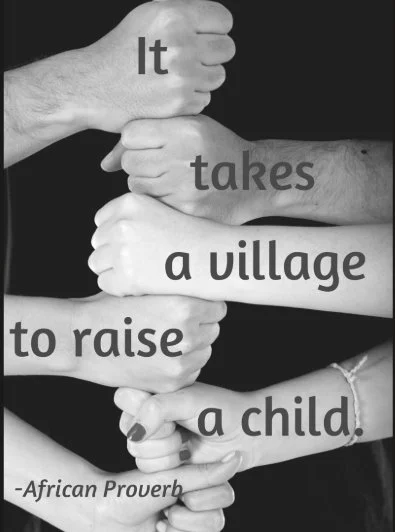
How to Build a Support System When You Have a Baby or Young Child
Who do you call when the baby won't stop crying?
Who can bring you dinner when you're exhausted?
Who can watch the baby while you take a shower?
Who can listen when you're having a hard day?
And who can help you find resources when you don't know where to start?
Motherhood was never meant to be a one-person job.
Whether you're pregnant, a brand-new parent, or raising a young child, having people you can turn to can make difficult days feel a little more manageable.
Your support system doesn't have to be huge.
It doesn't have to look like anyone else's.
And it doesn't have to be made up entirely of family.
Sometimes your village is a friend.
Sometimes it's another mom.
Sometimes it's your pediatrician.
Sometimes it's a community organization.
And sometimes it's a resource you didn't even know existed.
YOU DON'T HAVE TO WAIT UNTIL YOU'RE OVERWHELMED
Asking for help doesn't mean you've failed.
It means you're recognizing what you and your family need and taking a step toward getting it.
There is strength in knowing when you need support.
1. Your Support System Doesn't Have to Be Huge
When people talk about having a “village,” it can sound like you need a huge group of people surrounding you.
You don't.
Your village might be:
Your partner
A parent or grandparent
A sibling
A close friend
A neighbor
Another parent
Your child's pediatrician
Your WIC office
A home visitor
A church or community organization
A nonprofit like KindNest
What matters most is knowing who you can turn to when you need something.
You don't need ten people.
You may only need two or three reliable connections.
2. Be Specific When You Ask for Help
One of the most common things people say to new parents is:
“Let me know if you need anything.”
It's a kind offer—but sometimes you're so tired that you don't even know what to ask for.
Instead of trying to figure out how someone can help, try being specific.
You might say:
“Could you bring dinner tonight?”
“Would you be able to pick up diapers?”
“Could you watch the baby for 30 minutes while I shower?”
“Can you take me to my appointment?”
“Could you help me with groceries this week?”
“Can you just sit with me for a little while?”
Sometimes people genuinely want to help.
They just need to know how.
3. Don't Forget About the Other Caregivers
Support isn't just important for moms.
Partners, dads, grandparents, foster parents, relatives, and other caregivers can also become overwhelmed.
Everyone caring for a baby or young child needs opportunities to:
Rest
Ask questions
Talk to someone
Learn new skills
Take a break
Find resources
Feel supported
If you're sharing caregiving responsibilities, try talking openly about what each person needs.
Instead of:
“I'm fine.”
Try:
“I need a break.”
“I don't know how to handle this.”
“Can you take over for a little while?”
“I need someone to listen.”
Those conversations can prevent small struggles from becoming overwhelming ones.
4. Find Other Parents Who Understand
Sometimes family members and friends want to help but don't completely understand what you're experiencing.
That's when connecting with other parents can make a difference.
Other parents may understand:
Sleepless nights
Feeding challenges
Toddler tantrums
Child-care stress
Returning to work
Pregnancy worries
Postpartum changes
Trying to balance everyone else's needs
You may find parent connections through:
Library programs
Parenting groups
Breastfeeding groups
Community centers
Churches
Home-visiting programs
Local nonprofits
Early-childhood programs
You don't necessarily need a formal support group.
Sometimes simply meeting another parent who says,
“Oh, I've been there too,”
can make you feel less alone.
5. Michigan Has Free Home-Visiting Programs
Here's a resource many families don't know about.
Michigan has home-visiting programs for eligible pregnant people and families with young children.
Home visiting connects families with trained professionals who can provide support during pregnancy and early childhood.
Depending on the program, a home visitor may help with:
Pregnancy
Preparing for your baby's arrival
Parenting
Infant care
Child development
Feeding
Breastfeeding
Baby supplies
Safe sleep
Health and wellness
Community resources
Family goals
Michigan 211 describes home visiting as free and voluntary, with programs available for pregnant people and families with children up to age six. Eligibility varies by program.
You Don't Have to Be in Crisis
Home visiting isn't necessarily about fixing a problem.
It can be about having someone knowledgeable in your corner.
Someone who can answer a question.
Help you find a resource.
Talk through a parenting concern.
Or simply remind you that you're doing better than you think.
Explore Michigan Home Visiting
Michigan Home Visiting for Families
KINDNEST TIP
You don't have to wait until you're struggling to find support.
Build your support system before you need it.
6. WIC Can Be More Than Food Assistance
If you're pregnant or have a child under five, WIC may be another important part of your support system.
Michigan WIC provides eligible families with nutrition assistance, education, breastfeeding support, and referrals to health and community resources.
That means your WIC office may also be able to connect you with other services that can support your family.
7. When You Don't Know Where to Start, Try 211
Sometimes the hardest part of getting help is figuring out who to call.
That's where Michigan 211 can help.
Michigan 211 connects people with thousands of programs throughout the state, including resources for:
Food
Housing
Utilities
Transportation
Clothing
Home visiting
Family support
Health resources
Other community services
Michigan 211 is available 24 hours a day, 7 days a week.
Call: 211
Call: 844-875-9211
Text: Your ZIP code to 898211
You can also search online by location and need.
8. Your Support System Can Help With Practical Things, Too
Support doesn't always mean having someone to talk to.
Sometimes you need something very practical.
You may need:
Diapers
Wipes
Baby clothes
Formula or feeding resources
Food
Transportation
Child care
Housing information
Employment resources
You shouldn't have to choose between asking for emotional support and asking for practical help.
Families often need both.
That's one reason having a network of community resources matters.
9. KindNest Can Help You Find Your Next Step
KindNest's Resource Library was created to make it easier for families to find organizations and information that may fit their needs.
The library includes resources related to:
Pregnancy
Parenting
Baby essentials
Food
Housing
Mental health
Domestic violence support
Infant care
Employment
Family stabilization
KindNest's current Resource Library includes connections such as Postpartum Support International, Nurse-Family Partnership, Baby2Baby, Michigan 211, WIC, Goodwill Industries, and other family-support resources.
Explore the KindNest Resource Library
10. You Can Ask KindNest for Help, Too
KindNest provides free care packages for pregnant women, new mothers, and families with infants and young children experiencing hardship throughout Michigan.
The current application process includes:
1. Complete the application.
2. KindNest reviews your request and follows up by text or email.
3. Schedule pickup or delivery when available.
4. Receive your care package based on current inventory and availability.
KindNest notes that demand and inventory can affect what is available, and items may be substituted.
Need Support?
What If You Don't Have Family Nearby?
This is something many parents experience.
Maybe your family lives in another state.
Maybe you're new to Michigan.
Maybe your relationships have changed.
Maybe you're raising your child without a partner.
Maybe the people you expected to help aren't able to.
That doesn't mean you don't have options.
Your support system can be built over time.
Start by finding one connection.
A parent group.
A library program.
A home visitor.
A pediatrician.
A community organization.
A WIC office.
A local nonprofit.
One connection can lead to another.
11. It's Okay to Say, “I'm Having a Hard Time”
Sometimes we become so focused on taking care of our children that we forget to tell anyone when we're struggling.
You don't have to pretend everything is fine.
You can tell someone:
“I'm exhausted.”
“I feel overwhelmed.”
“I don't know what I'm doing.”
“I need help.”
“I don't feel like myself.”
Those words aren't a failure.
They're an invitation for someone to support you.
If you're experiencing ongoing sadness, anxiety, hopelessness, frightening thoughts, or other concerning symptoms, talk with your healthcare provider or another qualified professional.
You deserve support, too.
A REMINDER FOR MOMS & CAREGIVERS
You don't have to earn support by reaching a breaking point.
You are allowed to ask for help simply because this season of life is hard.
12. Your Village May Look Different Than You Expected
Maybe you imagined your village would be your family.
Maybe you thought friends would be nearby.
Maybe you expected parenthood to feel more connected than it actually does.
That's okay.
Your village can change.
It can grow.
It can look completely different from what you imagined.
And sometimes the people who become part of your support system are people you never expected to meet.
The goal isn't to build a perfect village.
The goal is to know:
“When I need help, I know where I can turn.”
What To Do Next
You don't need to build your entire support system today.
Start small.
01 — Identify One Person
Think of one person you could call when you need help.
02 — Identify One Professional
This might be your pediatrician, WIC office, healthcare provider, or home visitor.
03 — Find One Community Connection
Look for a parenting group, library program, nonprofit, church, or community organization.
04 — Save One Resource
Bookmark the KindNest Resource Library or Michigan 211.
05 — Ask for One Thing
Don't wait until you're completely overwhelmed.
Ask for the help you need now.
Your Village Doesn't Have to Be Perfect
Your support system may not look like the picture you had in your head.
That's okay.
Maybe your village is one friend.
Maybe it's a grandparent.
Maybe it's another mom you met at the library.
Maybe it's your pediatrician.
Maybe it's a home visitor.
Maybe it's a community organization.
Maybe it's a nonprofit that helps connect you to another resource.
What matters isn't how many people are in your village.
It's knowing that you don't have to carry everything by yourself.
“Asking for help isn't a sign that you can't do it. Sometimes it's the strongest thing you can do for yourself and your family.”
KindNest Is Here to Help You Find Your Village
KindNest believes families deserve to feel supported, connected, and cared for.
Sometimes the resource you need is a care package.
Sometimes it's a parenting program.
Sometimes it's food assistance.
Sometimes it's a support group.
Sometimes it's simply someone helping you figure out where to start.
KindNest's Resource Library brings those connections together in one place so families don't have to search alone.
Start Here
Explore the KindNest Resource Library
Need Baby Essentials?
You Don't Have to Do Motherhood Alone
There will be hard days.
There will be exhausting days.
There will be days when you question everything.
But you don't have to face those days alone.
Ask for help.
Accept support.
Find your people.
And remember:
Start with one need.
Find one resource.
Take one step.
Your village doesn't have to be perfect.
It just has to be there when you need it.
Important Resource Disclaimer
KindNest shares outside resources as a helpful starting point. Services, eligibility requirements, availability, hours, enrollment periods, and response times may vary by organization. Please contact each organization directly to confirm current information before visiting, applying, or relying on a particular service.
KindNest care packages and individual items are subject to current inventory and availability. Submission of a request does not guarantee that every requested item will be available.
Information about postpartum health, infant care, mental health, and parenting is provided for general educational purposes and does not replace medical or professional advice. If you have concerns about your health or your child's health, contact an appropriate healthcare professional.